

ShieldGemma 9B on AMD Ryzen AI Max+ 395 (128 GB)
Can the AMD Ryzen AI Max+ 395 (128 GB) run ShieldGemma 9B?
Yes, it runs well
Runs well. At Q6_K it needs about 16.6 GB of 96.0 GB usable and makes one decision in about 182 ms.
- Best quant
Q6_K- Time per decision
- 182 ms
- Decisions per second
- 5.5/s
- Input assumed
- 512 tokens
- Returns
- Probability or score
Best app to run it on the AMD Ryzen AI Max+ 395 (128 GB)
On Windows
- Built for Ryzen AI and Strix Halo, including NPU + iGPU modes on Windows.
lemonade pull QuantFactory/shieldgemma-9b-GGUF:Q6_KDownload ShieldGemma 9B
Recommended for the AMD Ryzen AI Max+ 395 (128 GB): Q6_K. Every other quantization has its own download link in the table below.
Quickest · Ollama
One command downloads a ready-to-run version and starts a chat.
ollama run shieldgemma:9bQuantized files · GGUF
Works in LM Studio, llama.cpp, Jan and Ollama. No sign-in needed.
Download the Q6_K file (opens in a new tab)
huggingface.co/QuantFactory/shieldgemma-9b-GGUF (opens in a new tab)
ollama run hf.co/QuantFactory/shieldgemma-9b-GGUF:Q6_KOriginal weights · Hugging Face
Full-precision files from Google, for fine-tuning, vLLM, Transformers.
How it’s rated
Match score
To order lists, each result also gets a match score out of 100 from four parts. It favors the most capable model that still runs well.
| Precision | 28.5 / 45 | |
|---|---|---|
| Memory fit | 25.0 / 25 | |
| Speed | 11.1 / 15 | |
| Clarity | 15.0 / 15 | |
| Match score | 79.6 / 100 |
Every quantization on the AMD Ryzen AI Max+ 395 (128 GB)
| Quant | Memory needed | Available | Time per decision | Runs | Quality | Download |
|---|---|---|---|---|---|---|
Q4_K_M | 14.6 GB | 96.0 GB | 167 ms | Runs well | 60Good quality (B) · 60 of 100: how capable the model is at Q4_K_M, whatever it runs on. Match score 78/100 (quality, fit, speed and memory use) sets the ranking. | GGUF (opens in a new tab) |
Q5_K_M | 15.5 GB | 96.0 GB | 174 ms | Runs well | 62Good quality (B) · 62 of 100: how capable the model is at Q5_K_M, whatever it runs on. Match score 79/100 (quality, fit, speed and memory use) sets the ranking. | GGUF (opens in a new tab) |
Q6_K | 16.6 GB | 96.0 GB | 182 ms | Runs well | 63Good quality (B) · 63 of 100: how capable the model is at Q6_K, whatever it runs on. Match score 79/100 (quality, fit, speed and memory use) sets the ranking. | GGUF (opens in a new tab) |
Q8_0 | 18.8 GB | 96.0 GB | 200 ms | Runs well | 64Good quality (B) · 64 of 100: how capable the model is at Q8_0, whatever it runs on. Match score 79/100 (quality, fit, speed and memory use) sets the ranking. | GGUF (opens in a new tab) |
F16 | 27.5 GB | 96.0 GB | 278 ms | Runs well | 64Good quality (B) · 64 of 100: how capable the model is at F16, whatever it runs on. Match score 77/100 (quality, fit, speed and memory use) sets the ranking. | Original weights (opens in a new tab) |
Times are for one request with a 512-token input and about 1 tokens written. Batching servers process many requests at once.
Other hardware that runs it
-
64Good quality (B) · 64 of 100: how capable the model is at Q8_0, whatever it runs on. Match score 83/100 (quality, fit, speed and memory use) sets the ranking.
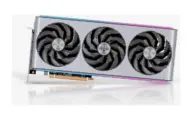 AMD Radeon RX 7900 XTX
-
64Good quality (B) · 64 of 100: how capable the model is at Q8_0, whatever it runs on. Match score 83/100 (quality, fit, speed and memory use) sets the ranking.
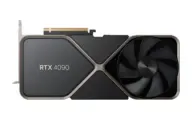 NVIDIA GeForce RTX 4090
-
64Good quality (B) · 64 of 100: how capable the model is at F16, whatever it runs on. Match score 83/100 (quality, fit, speed and memory use) sets the ranking.
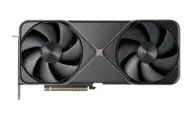 NVIDIA GeForce RTX 5090
-
64Good quality (B) · 64 of 100: how capable the model is at F16, whatever it runs on. Match score 83/100 (quality, fit, speed and memory use) sets the ranking.
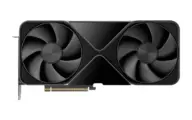 NVIDIA RTX PRO 6000 Blackwell
-
63Good quality (B) · 63 of 100: how capable the model is at Q6_K, whatever it runs on. Match score 83/100 (quality, fit, speed and memory use) sets the ranking.
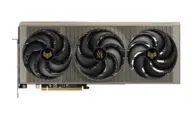 AMD Radeon RX 9070 XT
-
64Good quality (B) · 64 of 100: how capable the model is at Q8_0, whatever it runs on. Match score 81/100 (quality, fit, speed and memory use) sets the ranking.
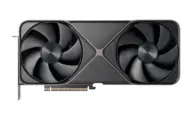 NVIDIA GeForce RTX 5080
Estimates come from published hardware specs and our open formulas, not from running the model on your machine. Real speed varies with runtime, drivers and settings. Numbers marked “Measured” come from a linked benchmark.