

GTE Reranker ModernBERT Base on AMD EPYC 7002 / 7003 series NAS (16 GB)
Can the AMD EPYC 7002 / 7003 series NAS (16 GB) run GTE Reranker ModernBERT Base?
Yes, it runs well
Runs well. At Q8_0 it needs about 0.8 GB of 12.0 GB usable and makes one decision in about 213 ms.
- Best precision
Q8_0- Time per decision
- 213 ms
- Decisions per second
- 4.7/s
- Input assumed
- 512 tokens
- Returns
- Probability or score
Best app to run it on the AMD EPYC 7002 / 7003 series NAS (16 GB)
On Linux
- Purpose-built server for encoder rerankers and classifiers: batching and Flash Attention keep each call to milliseconds.
text-embeddings-router --model-id Alibaba-NLP/gte-reranker-modernbert-base --port 8080Download GTE Reranker ModernBERT Base
Original weights · Hugging Face
Full-precision files from Alibaba, for Transformers, Sentence Transformers, Text Embeddings Inference, Infinity or vLLM.
huggingface.co/Alibaba-NLP/gte-reranker-modernbert-base (opens in a new tab)
How it’s rated
Match score
To order lists, each result also gets a match score out of 100 from four parts. It favors the most capable model that still runs well.
| Precision | 31.5 / 45 | |
|---|---|---|
| Memory fit | 25.0 / 25 | |
| Speed | 10.3 / 15 | |
| Clarity | 15.0 / 15 | |
| Match score | 81.8 / 100 |
Every quantization on the AMD EPYC 7002 / 7003 series NAS (16 GB)
| Quant | Memory needed | Available | Speed | Runs | Quality | Download |
|---|---|---|---|---|---|---|
Q8_0 | 0.8 GB | 12.0 GB | 213 ms | Runs well | 70Great quality (A) · 70 of 100: how capable the model is at Q8_0, whatever it runs on. Match score 81/100 (quality, fit, speed and memory use) sets the ranking. | All files (opens in a new tab) |
F16 | 0.9 GB | 12.0 GB | 244 ms | Runs well | 70Great quality (A) · 70 of 100: how capable the model is at F16, whatever it runs on. Match score 81/100 (quality, fit, speed and memory use) sets the ranking. | Original weights (opens in a new tab) |
Times are for one request with a 512-token input. Batching servers process many requests at once.
Other hardware that runs it
-
70Great quality (A) · 70 of 100: how capable the model is at F16, whatever it runs on. Match score 86/100 (quality, fit, speed and memory use) sets the ranking.
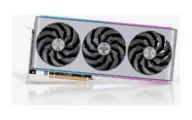 AMD Radeon RX 7900 XTX
-
70Great quality (A) · 70 of 100: how capable the model is at F16, whatever it runs on. Match score 86/100 (quality, fit, speed and memory use) sets the ranking.
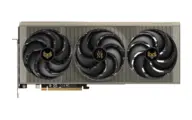 AMD Radeon RX 9070 XT
-
70Great quality (A) · 70 of 100: how capable the model is at F16, whatever it runs on. Match score 86/100 (quality, fit, speed and memory use) sets the ranking.
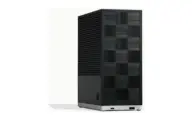 AMD Ryzen AI Max+ 395 (128 GB)
-
70Great quality (A) · 70 of 100: how capable the model is at F16, whatever it runs on. Match score 86/100 (quality, fit, speed and memory use) sets the ranking.
 Apple M1 (16 GB)
-
70Great quality (A) · 70 of 100: how capable the model is at F16, whatever it runs on. Match score 86/100 (quality, fit, speed and memory use) sets the ranking.
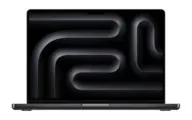 Apple M1 Max (64 GB)
-
70Great quality (A) · 70 of 100: how capable the model is at F16, whatever it runs on. Match score 86/100 (quality, fit, speed and memory use) sets the ranking.
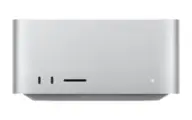 Apple M2 Ultra (192 GB)
Estimates come from published hardware specs and our open formulas, not from running the model on your machine. Real speed varies with runtime, drivers and settings. Numbers marked “Measured” come from a linked benchmark.